
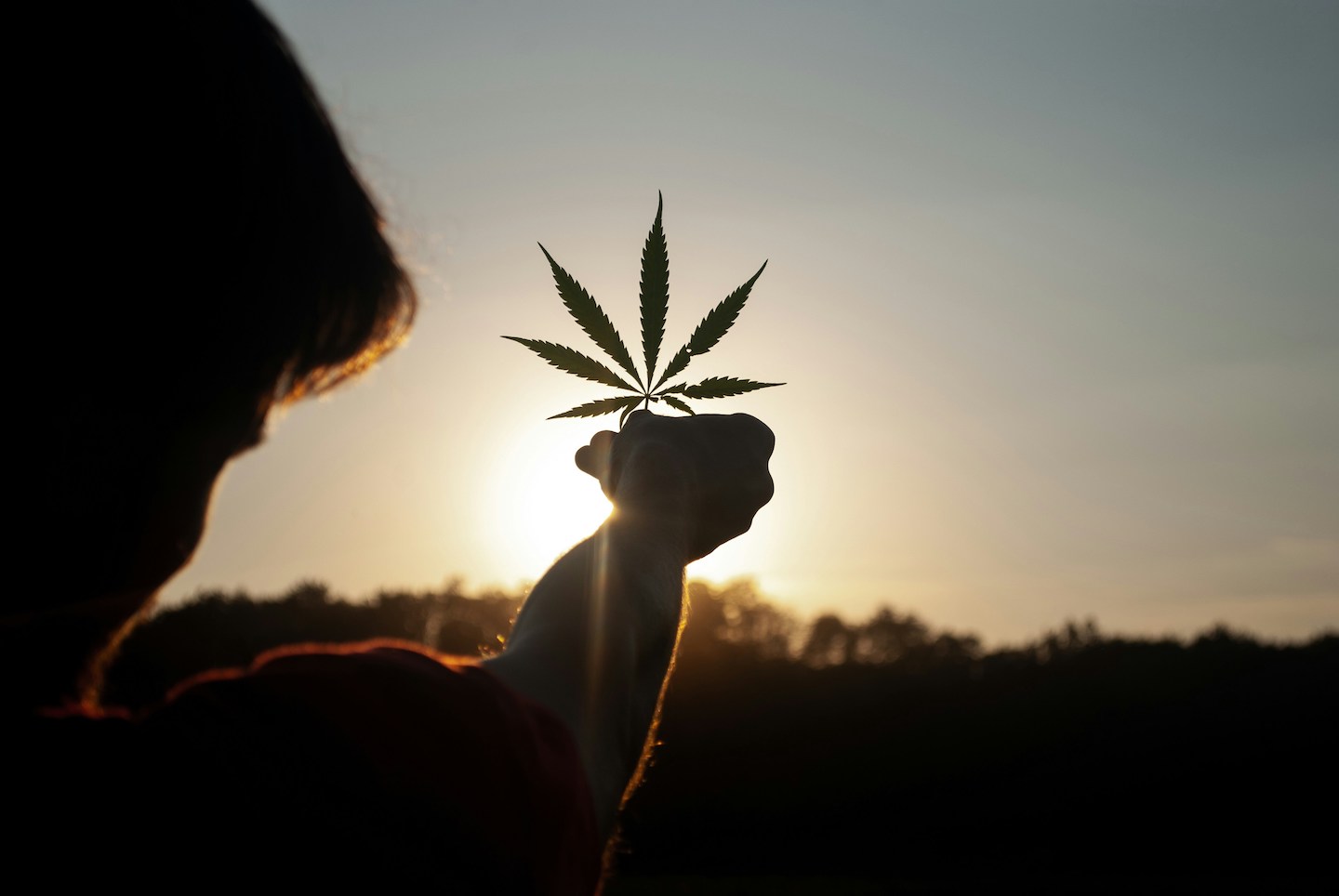
In April 2016, the production of industrial hemp (a variety of the Cannabis Sativa plant) was legalized by the Greek state introducing new opportunities and markets to a country that is desperately trying to get back on its feet. It’s been a long known fact that Greece’s agriculture and farming sectors have significant growth potential. With the right climate, soil and geographical profile even the most non-conventional cultivations can flourish. As a result of recent legislation, Mihalis Theodoropoulos established KANNABIO, the first Organic Hemp Social Cooperative in Greece, who tells us about industrial hemp production, its growth prospects in Greece and the Cooperative’s long term vision.
Industrial hemp, or also known as hemp, is an agricultural product. The plant’s components are used in a wide range of products, including food and beverages, cosmetics and personal care products, food supplements, in addition to fabrics, textiles, yarns, paper, construction and insulating materials. According to estimates, the global hemp market consists of more than 25,000 products.
Hemp is a variety of Cannabis Sativa and belongs to the same kind of plant species as euphoric cannabis. However hemp differs genetically as does its use and chemical composition. For example, it includes a minimum amount of tetrahydrocannabinol (less than 0.2%), so it cannot be used for euphoric purposes – it can only be used for the products already mentioned.
The birthplace of hemp is considered central Asia (India, Iran and China). Many cultures have been cultivating hemp since ancient times, making items such as ropes, clothes, paper and food products. Egyptian Pharaohs, the ancient Greeks and even Chinese Emperors used hemp and the plant has a recorded history of more than 9000 years. Even Greece, over the last century, produced, processed and exported several tonnes of hemp until it was definitively banned in 1957.
Currently, more than 30 countries cultivate hemp, China being among the countries with the highest production yield (over 650,000 hectacres) and exporter of textile products made of hemp and its seeds. The European Union (EU) also has an active hemp market. According to the European Industrial Hemp Association, 183,000 hectacres of industrial hemp was cultivated and processed in 2014 and that number rose to 220,000 hectares in 2015.
Organic hemp is produced without any chemical fertilizers or plant protection means. It is organically grown to produce certified organic products. As an organic hemp cooperative we will only work with organic producers and those whose production is certified organic, because we feel very strongly about environmental protection and the production of high quality products. Equally, quality organic products have many competitive advantages that we plan to fully harness and promote.
KANNABIO is a social cooperative enterprise that was founded in April 2016 when the cultivation of hemp in Greece became legal. However, members of KANNABIO have been active since 1998 when the first KANNABISHOPs opened their doors in Chalkida and Chania. However their owners were also the first to be prosecuted and their goods were seized.
Other members have been equally active since 2005 on a political level organizing promotional events and raising awareness on the legalization of hemp. Our members have struggled over the last three years to legalize hemp, consulting administrators and putting pressure on political leaders to take action. Legalization came just in time, in April, and so we didn’t lose this year’s cultivation season.
KANNABIO will oversee the cooperative production and processing of organic hemp, in addition to the production of organic quality products, informing and raising awareness about the benefits of hemp for the economy and the environment, while providing expertise and international networking and promotion opportunities.
Hemp was removed from the list of illegal substances in 2013 and unfortunately it took 3 whole years for the Common Ministerial Decision (Government Gazette B 929/2016) to be signed on 6 April 2016. The Common Ministerial Decision defines the terms and conditions for the cultivation of hemp. While some gaps and administrative burdens remain, which inevitably cause delays, legally we’re heading in the right direction.
There are 52 varieties of hemp registered in the “Common catalogue of varieties of agricultural plant and vegetable species” and their tetrahydrocannabinol (THC) content, the principal psychoactive constituent of cannabis (or cannabinoid), is less than 0.2%.
Anyone can now cultivate and process hemp and take advantage of the single farm payment scheme. But to grow industrial hemp in Greece, producers need to meet the following conditions:
There isn’t a minimum area required to grow hemp, unless a producer wants to take advantage of the single farm payment scheme where at least 4 hectares are required. Otherwise, in theory, hemp can be grown on less than 1 hectare, but this area is not sufficient enough for processing purposes.
Feasibility studies report that in order to build a small processing plant you need to have at least 200 hectares worth of space, while it takes more than 10,000 hectares for the sustainable operation of a processing unit.
Cultivation costs are relatively small but do depend on the area. Hemp does not need chemical fertilizers or plant protection, and can easily be grown organically which significantly reduces costs. The plant is fully utilized, there is no wastage and nothing is thrown away. You need 3-5 kg of seeds per hectare, which retails at 12-15 euros per kilo. It needs 4-5 water treatments per growing season (depending on the rainfall, drought and heat), 300-500 mm water / 1 hectare, and requires very little in terms of nutrients and fertilization.
The total production cost (seeds, sewing, fertilization, irrigation, harvesting and packaging) is estimated at 105-120 euros (conventional farming) per hectare, while the total gross revenue, from both seed and straw, is estimated at € 220-250 euros (conventional cultivation) per 1 hectare. Producers should realistically assess production costs before agreeing sales prices with manufacturers, while the Ministry of Rural Development should establish satisfactory selling prices for small producers to avoid monopolization by large producers.
While the cost of growing hemp is relatively low, the cost of processing it is a significant investment. A small hemp oil processing plant can be established for 80,000-100,000 euros, while larger processing units (production of 3-6 tons per hour) would require an investment of more than 5 million euros for its construction alone. Processing units can be funded by financing schemes such as the National Strategic Reference Framework (NSRF).
Industrial hemp doesn’t have any special soil requirements. It requires fertile soil, that is rich, irrigable, drains well and that is ventilated, with a good ground structure and has 20-30% worth of sand. The best soils have a medium texture. For light soils (sandy, or poor texture) you must add organic matter and adequate fertilizer. Hemp does not grow well on infertile, compact and heavy soils, or on dry or gravel-like ground. Hemp requires a pH level that is above 6. The best sites to grow hemp are neutral or slightly alkaline (pH between 6.8 and 7.5). During the sewing period, hemp requires standard treatment (ploughing, milling) similar to spring plants and the soil should have a relative abundance of nutrients (Potassium, Calcium, Phosphorus, Nitrogen).
Hemp can also adapt to different environments. Hemp grows best in Spring and thrives at temperatures between 15-27 degrees Celsius. It grows best in areas where maize and wheat are cultivated. Drought and heat reduce efficiency, the size of the fibres and the quantity of oil and it’s possible that under these climatic conditions the THC content of the plant may increase especially if not adequately watered. Industrial hemp does not tolerate frost, insufficient moisture and very humid conditions (e.g. regions prone to flooding).
Sowing hemp in Greece is ideal from mid-March to mid-end April, depending on the region, when the soil temperature rises above 10 degrees Celsius. It can also be done mechanically with a seed drill (but with certain necessary modifications). It is a small to medium plant in terms of its organic cycle (90-150 days), depending on the variety and its cultivation purpose. The plant grows to an average of 50 cm per month and can reach up to 3-5 meters high.
Harvest takes place manually or mechanically in August and September, depending on the region and the cultivation purpose. The harvest stage involves collecting seeds / flowers, cutting the stems, drying them in the field and finally packaging them in bales. It is high-intensity work. The whole of the plant is collected, and there is nothing left behind in the field. Thereafter the producer will have to give his or her production to a processing unit or factory.
In very broad terms, the yield is about 1 ton of dry matter (hay) per 1 hectare, 250-400 kg of fibre per hectare and 100-150 kg of seeds per hectare. It is recommended that the producer pre-sells his or her production to a manufacturer at a predetermined price. The market prices of raw materials are not yet determined in Greece and there is no precedent. In Europe, prices vary depending on demand and on the quality of the raw material. Overall in recent years prices have ranged from 100-155 euros per ton of dry straw and 120-200 euros per ton of organic seeds (€ 50-100 / ton for conventional seeds).
According to estimates by agronomist Abraham Nicolaides, the standard gross margin per hectare for industrial hemp (conventional farming) is about 105 euros (without subsidies), while the equivalent for corn is 62 euro (without subsidies) and for cotton 91 euros (with subsidies). There are greater economic benefits in growing hemp, as opposed to corn, wheat, cotton and soybeans.
Processing hemp is a demanding process and is labour and equipment intensive. The five main components of industrial hemp are its flowers, its seeds, its fiber, its pith (i.e. woody trunk) and its powder, all used by processing units to produce more than 25,000 products.
The Greek market for hemp is still quite virgin while in Europe as a whole there are large margins and growth prospects. In Greece certain investments are required for the processing and treatment of hemp which would also serve as an incentive for producers to grow hemp in large areas. The competitive advantage of Greece for the production of high quality hemp is its climate, soil and geographical location. Hemp is expected to have greater yield per hectare with excellent fibre and seed quality.
Europe imports significant amounts of hemp fibre (mainly from China) to meet the increased demand. For example Europe imports half the seeds it consumes, while a very small percentage of seeds is produced organically. This is a great opportunity for Greece to produce quality fibre and ecological building materials.
In Europe we consume 12,000 tons of hemp seeds (for food, oil production, etc.) per year and we produce a little less than 6,000 tons. In recent years hemp’s nutritional value has been largely recognized. Its benefits for the human body have resulted in an explosion of oils, nutritional supplements and personal hygiene products. Aside from consumers that shop from organic stores, hemp has captured the niche markets of superfoods, vegan and gluten-free food products, in addition to natural cosmetics.
Globally, there is a very high demand for hemp fibre, i.e. to produce garments and insulating materials and for its pith, i.e. to produce construction materials. Those interested in natural building materials will discover the construction benefits of industrial hemp. Currently, France and other countries use hemp in soundproofing music halls.
We want to promote cooperative principles and a philosophy of working together. We’re not only focused on the commercial side of cultivating and processing hemp, but our aim is to provide training, engagement, job creation and social consciousness, alongside the production of quality, organic hemp that is of Greek origin.
KANNABIO’s vision is for Greek organic hemp to become an international standard of quality through cooperative production and processing. We want to lay the foundations for the promotion and the production process of the plant itself, and we want to actively contribute to the establishment of the Greek industrial hemp market, the agricultural growth of Greece and its sustainable rural development.
KANNABIO will oversee the production and processing of quality organic oil extraction products, nutritional supplements and personal hygiene products, and the production of lime hemp for building materials.
We have already established a grassroots company that will build and operate a large industrial hemp processing unit (6 tons per hour) and a processing plant for building materials, with a total investment of 5-7 million euros.
Finally during the winter of 2016-2017 we are planning a 12 city tour in Greece, where we will display a mobile museum exhibition of industrial hemp while organizing public events with guest speakers.
We wish the members of KANNABIO all the best in their initiative.
For more information on KANNABIO and producing hemp in Greece, contact Mihalis Theodoropoulos, Director of environmental management and policy.