
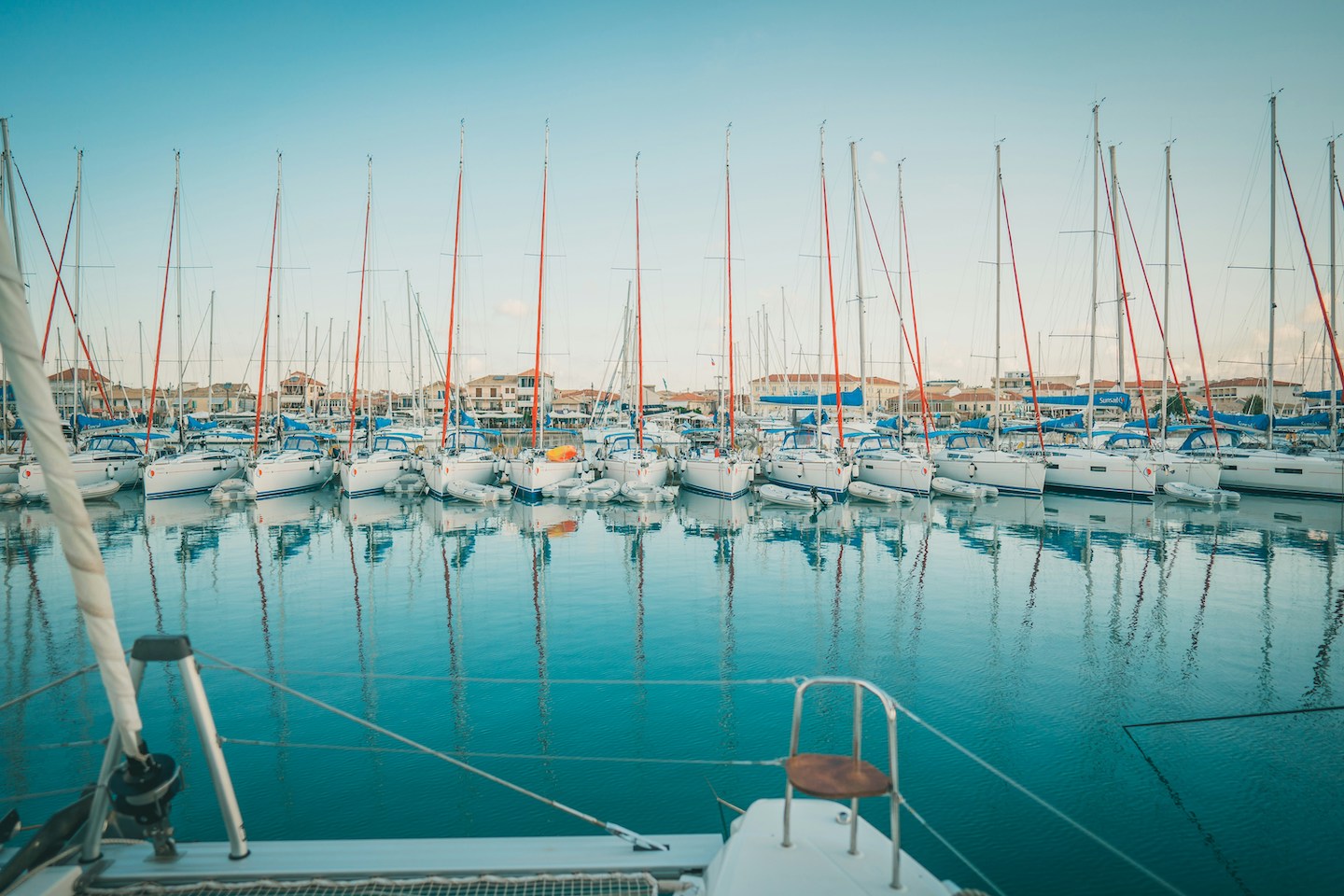
As summer comes to an end, we thought what more appropriate than to write about the unpretentious and all round humble Greek Marina. It always held a lower profile in comparison to the French marina or the Italian Marina or even the Monaco marina because it never really catered to the super rich. But despite its discreet appearance, the economic slump which hit the Euro nations in 2008 didn’t spare those beautifully designed harbors known to moor pleasure yachts and boats. Alas, fast forward 6 years later and sea tourism development is on the rise again thanks to dedicated efforts to promote the Greek marina as essential infrastructure for yachting and water sports.
This month, Tekmon Geomatics (TG) speak to Spiros Dallos (SD), Managing Director of Lefkas Marina the only organized marina on the Ionian island of Lefkas and one of the most recently developed in all of Greece. Spiros proudly spoke to us about its birth, its growth, its challenges but also its competitive advantages.
SD: The city council at the time (1999) put out a public tender to develop a fully equipped and organized marina on the island. The Master Plan and building permits were readily available and the winner would undertake the task to develop an area of 165 000 square meters which included 72 000 square meters of land, among which 7000 square meters were built-able, and 93 000 square meters of water area to handle. It’s important to note that all marina developments in Greece are publicly owned. Once the city council or prefecture calls out a tender for the development and management of a marina then private companies bid for the tender. In our case we, Lefkas Marina S.A., won the bid in 1999, construction ended in 2002 and we’ve got an operating lease for forty years, so until 2039. The investment was worth 30 Million Euros.
SD: Our operating lease would last 40 years and we had flexibility on how to operate the marina as long as it agreed with the Master Plan. While our team of 16 manages directly the yachting and boating area, we’ve outsourced all other services to third suppliers including the hotel, the cafes and restaurants, the repair services, the rental shops etc and we ask for a monthly rental fee. In turn, every year we are obliged to pay a flat fee to the city council which is part of our lease agreement.
SD: I can think of three principal challenges. First, the recession that hit the Eurozone in 2008 reduced the number of yachts and boats entering the marina. Our main customers would arrive from England, Germany and Italy so we had fewer arrivals from Europe. This downward trend lasted for approximately 5 years and this year, 2014, we’ve begun to see increased numbers from our European neighbors. Secondly, illegal mooring hurts business. While we strive for excellent value for money, quality facilities and excellent customer service, illegally mooring your vessel is dangerous but nonetheless it’s free. Lastly, laws and regulations often confuse management and visitors because 1) they keep changing and 2) they aren’t enforced. For example, border crossing fees which were eventually ruled unconstitutional or requiring approval from every individual port authority even if your destination was a nearby island. Luckily in 2010, the Greek Marinas Association was established to represent the best interest of marinas and the yacht tourism industry. Much progress has been made in simplifying the entry and exit procedures and any fees that may apply are transparent and in line with EU legislation.
SD: We’ve kept calm through the rough waters and this seems to be bearing fruit. We’ve seen an average of 5000 arrivals yearly between 2004 and 2013. We operate all year round, we strive for repeat customers and most of our advertising is done through word of mouth. Although it must be said that KG MedMarinas Management which is the primary shareholder of Lefkas Marina S.A. has been active in all the major boat shows and exhibitions this year and this has helped improve the image of Greece’s sea tourism tremendously. Moreover, being part of the D-Marin marinas group creates great advantages for our customers and ensures a high level of customer service and facilities.
We’re still a relatively new marina and while we can’t expand building-wise we’re renovating and modernizing existing facilities to attract a greater number of visitors every year. During peak season (May to October) we’re at 95% capacity and over the weekends we easily reach 100%.
Finally there’s no doubt that such a large scale development project not only directly creates jobs it also indirectly boosts local businesses and the reputation of the entire island. It’s no easy feat but surely the Greek Marina is gaining popularity and will most likely continue to make its presence on other parts of Greece’s 16 000 km coast line.