
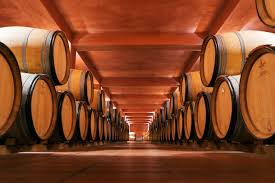
The Alpha Estate is an impressive, privately owned, vineyard established in 1997 which today covers a total area of 210 acres in the heart of the Amyndeon appellation, an area with a protected designation of origin in North-western Greece. Its birth and growth are the result of strong passion, determination and painstakingly laborious work.
This month Tekmon Geomatics (TG) speaks with Angelos Iatridis (AI), enthusiastic co-founder of the Alpha Estate but more so, a role model and visionary for Greek vine growing and winemaking. Angelos tells us, why despite the challenges, the Alpha Estate label is taking Greek wine to a whole new level.
AI: The story starts with the ecosystem. We started by working the land and subsequently cultivating the vineyard until we reached a point where we could exploit the quality of our cultivation. We planted the vineyard in 1995 and the very first harvest, which we deemed fit for trade, was in 2003. But our first bottles made it onto the shelves in 2005, that’s 10 years after the vineyard’s plantation. We could have traded our first harvest earlier but we were very strict on quality and insisted on letting our cultivation mature so as to strengthen the plantation’s core roots. This waiting period was necessary to achieve the best value from a quality-based, instead of a quantity-prone, vineyard. We’re finally expecting a return on our investment in 2017.
AI: For the white varieties, on average, we produce 7000-8000 kg grapes per hectare. For the red varieties, we produce an average of 4000-5000 kg grapes per hectare. We purposely aim at smaller yields for consistency and loyalty toward quality.
TG: How did you acquire 105 acres worth of land in Greece?
AI: The land wasn’t an inheritance. My business partner and I slowly purchased the parcel, piece by piece, until we were content with the right size – a size which we considered necessary to run a viable business. The process was quite painful. The area is NATURA protected and also happens to be an archeological site so additional permits were required. But that’s normal procedure. The challenge was in signing over 80 property title deeds because we were very picky in terms of location. We wanted to grow our vineyard right here in Amyndeon. To make things even more complicated, the land of interest would often have multiple beneficiaries who lived in various parts of the world. But we persisted because we wanted this specific land parcel you see on the estate. It had all the right characteristics we were looking for to create a top-quality product that met our stringent standards (i.e. combination of a low fertility sandy-type soil and unique climate features). The whole process took 15 years. Today, we fully own 185 out of the 210 acres. An additional 25 acres were recently leased to us by the Amyndeon city council for 20 years.
AI: Local residents were suspicious at first. Such a large investment in a small countryside town, such as Amyndeon, is bound to create a bit of controversy. People initially thought we wanted to take over their land for personal benefit. In reality, our sole objective was to build on the area’s potential and place Amyndeon on the viniculture map of the world. Already the area is becoming known on a global scale for its unique exclusive core blends.
AI: Essentially, job creation. Also our establishment pays the most sales tax because of our sales growth. Considering the difficult economic situation our country is going through we strongly believe that boosting the local economy contributes to national growth. We hire many professional in the area for all types of work required on the vineyard, from all sorts of suppliers to handymen. The local economy as a whole revolves around the estate.
AI: Our exports. We’re very outward looking as a company. Our exports drive the national economy and we’re proud to be contributors.
AI: Not great. Primary production is extremely hard work. The number of vineyards in Greece is dropping because working on a vineyard is laborious and there is a very low return. The future lies in establishing organized units that include both production and processing units. It’s hard to survive on cultivating vineyards and then selling the yield to independent wine makers. I’m optimistic nonetheless because many new growers will adopt the philosophy of ‘grower = trader.’ Because Greece isn’t able to produce large quantities it could easily stand out as a quality-producing wine country. It’s the best value for money solution.
AI: The focus should be on quality production. This would inevitably bring a greater return on investment. Focusing on quantity isn’t worth your while because the profit margins are very slim and the producer has to fiddle with the quality of the grape in order to sustain a living. This makes it hard to compete with other countries that have large economies of scale and are able to preserve the quality of their production at lower costs. The solution: The vine grower should also be the wine maker and trader as mentioned already. In Greece, this isn’t common practice yet. Most of the big winemakers buy their grapes from independent producers. The purchase price on the grape is very low and in many cases producers aren’t able to support the quality of their vine. Many vine growers are turning to other cultivations because they aren’t able to financially sustain their vineyard.
AI: Every country has its own varieties and unique landscape, not to mention a different culture and people. What perhaps allows us to stand out is that our very best harvest is always the one that comes next so we’re constantly improving the features of our wines. By improving the characteristics of our wines we also improve ourselves as individuals. The estate is the result of a strong team effort, from the growers up to the administrators. We’re like a family and we have a great relationship which helps a lot. Finally, we love what we do and that’s priceless because passion is contagious.
AI: Our production objective has been achieved. We’re not likely to invest in anymore land. In the short to medium term all future investments will be in equipment and expanding our processing area in addition to our reception area so that we’ll be able to welcome a greater number of visitors. Last year we had 7800 registered visitors and we’re expecting the number to grow in the coming years. In the longer term we’d like to set an example for future wine growers in Greece to focus on slow yet sustainable growth and above all quality in all stages of the wine making process.