
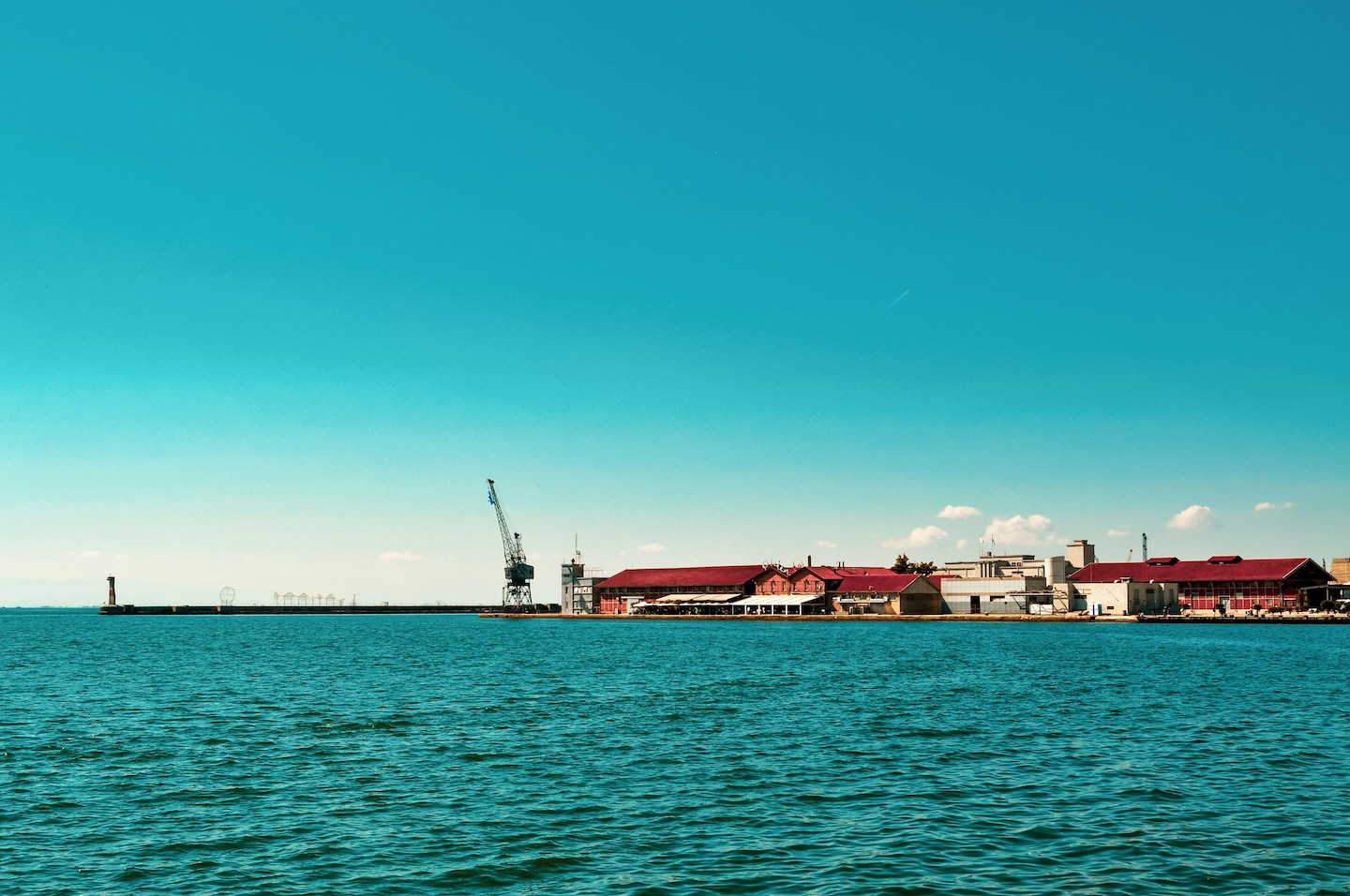
Urbanization in Greece happened fast. The trend started in the 1960s when flocks of people moved to urban centers in search for a better life and work opportunities. Today 61.4% of Greece’s population lives in cities, Athens and Thessaloniki accounting for almost half.
Cramped urban centers didn’t leave much room for open green spaces however in the early 21st century, municipalities started to realize that open public spaces are essential if we are to improve the quality of life in what had become congested and crowded cities.
This month, Tekmon Geomatics (TG) speaks to Prodromos Nikiforidis (PN) a pioneer in improving the quality of life in Greek cities and the lead architect on the harbor regeneration project in Thessaloniki. Mr. Nikiforidis tells us how public spaces are changing the shape and feel of Greek cities for the better.
PN: Without a doubt, a public space must be democratic. In other words, a successful public space is one that has no socio-economic boundary. It should be for the rich, the poor, the uneducated, the educated etc. It must, first and foremost, be a democratic space. Now, ‘how can we achieve this?’ is the key question. It’s not easy. When you design a public space you have to ask yourself ‘what do people want?’, ‘what is it they seek?’ When drawing up the plans we based ourselves on this philosophy.
PN: We came up with the idea to design multiple gardens along the harbor. Every garden would have a theme that everyone could relate to. The children’s play areas were surely to be successful and the same went for the long and wide walking strip. Children like to play and people like to walk. We decided to experiment with the gardens concept which was slightly risky because we weren’t sure if people would use them.
It is possible that people ignore the gardens entirely. Some gardens, which we had not expected to be successful, in fact, monopolized peoples’ interest, like the ‘Water Garden’. However, the ‘Memory Garden’ didn’t quite grasp the passer-by’s attention whereas we thought it would. Then there was the ‘4 Seasons Garden’ where people were initially reluctant but with time came to understand its philosophy and currently residents appreciate its natural yet wild and untamed space. Now, we could have done much more, which we didn’t. That’s a fact. For example, we had proposed an experimental garden area for school children to come into contact with nature, plant trees and various other similar activities. At the time this idea was turned down but had it been proposed later I’m sure it would have gladly been accepted. We carried out the regeneration studies back in 2002. Since then people have changed and so have their mindsets. Another example which at the time we hadn’t thought of was to create an outdoor gym which I’m sure people would use. We proposed it in retrospect. It’s not as easy as it sounds but it’s worth exploring. There are many such examples.
What is certain is that the new and extended harbor area belongs to everyone and most of all to the environment. What we did was create the bedrock for it to grab the public’s attention. We wanted people to remove themselves from the everyday stresses that come with living in a large city. If you think of most seaside areas there is a strong drive toward consumerism with shops, cafes and tavernas along the strip. You see this, a lot. Such spaces do not allow people to walk freely, to think or even to relax. We wanted to tap into the non-consumerist moods of people and I truly believe we achieved this.
Throughout the regeneration project there was a lot of scaffolding and the construction site looked very unappealing. There was very little green and dirt everywhere. It’s obvious that people were doubtful and even a little anxious as to what was happening. As soon as we introduced the new harbor area, peoples’ moods changed. There was a strong sense of enthusiasm.
Our team won the bid in 2002 and that’s when we started drawing the plans. The first construction phase started in 2006 and ended in 2008. We thought it would be best to regenerating the poorer part of town first because there wasn’t much happening in that area. The second phase of the regeneration project took place in 2011 and ended in 2013. In late 2013 the public was able to take fully advantage of the whole regenerated area.
There used to be a tendency of indifference toward the public space. People sought to leave the city because the city was a ‘bad place’ and ‘we should get back in touch with nature.’ It never really crossed peoples’ minds that cities can also offer advantages and positive experiences. Over the recession, people had less money in their pockets and their traveling was limited. All of a sudden, people started to gain interest in their city’s spaces. Residents started to realize that the city isn’t necessarily ‘a bad thing’ and that it can offer a stimulating environment. People now come here from all areas. Families see it as a field trip. Based on the turnout and the wealth of people that make use of the harbor area, I would say that we achieved our goal. You could tell that people are happy when they are here; they are having a good time.
The project’s sustainability is in fact a challenge. We’re exploring multiple solutions. The most practical solution is to assign a special and trained sustainability team whose sole purpose is to ensure the cleanliness and safety of the harbor area. We’re looking at sustaining an area worth 250 000 square meters with a large number of passerbys. There are many needs, from replacing lamps and carrying out minor repairs to ensuring hygiene and crime control. This however is expensive and today, a city’s budget is extremely tight. Nevertheless, its sustainability is extremely important and this is our next task. Also worth mentioning are active citizen groups such as “Los Lambicos” that voluntarily remove negative graffiti and other signs of vandalism. Then there’s another team that distributes excrement bags to pet owners. We’ve also created a tree planting club where volunteers can plant trees and dedicate each tree to a specific cause or loved one. Residents can also “adopt” trees in exchange for small donations. People are actively using the harbor area for the public good and this is a hopeful sign for the future. The ideal situation would be for the city council to collaborate with the harbor’s active citizen groups so that everyone contributes to the area’s sustainability.
There are always challenges in large-scale projects. We extended the harbor area by 3.5 kilometers. Our collaboration with the Municipality of Thessaloniki was always positive. Aside from some difficulties during the construction phase, which were to be expected, the main challenges were ‘accepting change’ and ‘welcoming the new.’ People were negative at first. As architects, we had to make sure that what we were designing would primarily please the local population. Of course, that didn’t mean this was our only criterion. Nonetheless, we put ourselves in the shoes of users and designed accordingly. With regeneration projects, it’s all too easy to get rid of everything that was there initially and start over. We didn’t take that approach. We preserved the unique aspects and expanded on these.
I believe architecture in Greece as a whole is quite indifferent and overall plain, which stems from many different reasons. Some people blame the engineers, others blame the architects, and others blame property owners. I say ‘we are all to blame.’ Architecture in Greece reflects the way in which Greek inhabitants see themselves in society and their relationships with others. Priority on the communal good is lacking. This has to change. The common good and individual interests cannot co-exist. The future of architecture lies in prioritizing public wellbeing. We live in crowded cities with very few green spaces. Private spaces belong to individuals but public spaces belong to everyone. We all have to take care of these so that we’re all better off. Certainly current generations and the ones to come are heading in this direction. There’s no doubt that Greek cities need an upgrade. This upgrade needs to happen with the development of public spaces. Now if buildings are ‘aesthetic,’or not, is not really as meaningful. Redefining and remolding the public space is the key to gentrifying cities.
There is a lot of advice I can give to new architects. Perseverance is extremely important. I don’t believe I’m a great architect. I’m an ok architect. But my greatest feature is my perseverance and when I truly believe in something I don’t give up. We also have to truly love what we do and if we don’t love it we shouldn’t be doing it. For architects especially, there are many challenges because of different mindsets and interests at stake hence the reason why perseverance is extremely significant in our field.